Every so often, a tool gets compared to products built for an entirely different purpose. Superglue is a clear example. It often appears alongside customer data onboarding platforms in search results.
However, this comparison misses the mark, not because Superglue is lacking, but because it serves a different audience and solves a different problem.
The clearest way to describe Superglue is how its own users explain it: it functions as a coding assistant for integration engineers. You define the integration you need between two systems, AI generates the code, and if one of those systems updates its API or interface, the AI automatically updates the connection.
These self-healing integrations enable teams to connect customer ERP systems, like NetSuite, in days rather than weeks by automatically adapting to schema changes – freeing engineering teams from repeated manual maintenance.
Still, even though Superglue handles direct system-to-system connections seamlessly, bridging the gap to unstructured client files calls for a different approach.
This offers significant value for engineers at systems integrators working within ecosystems like NetSuite, Sage, or SAP, where the main operational bottleneck is building and maintaining custom integrations.
The core distinction comes down to who is using the software. Superglue is designed for software engineers and technical consultants comfortable writing AI prompts and reviewing system logs. It’s not built for implementation managers.
The platform lacks the operational interfaces that client delivery, professional services, or onboarding teams need.
Specifically, Superglue doesn’t provide:
Superglue is built for technical users managing automated pipelines, not account leads who understand why a client’s chart of accounts is structured unconventionally and need to correct it before launch.
This isn’t a flaw in Superglue. It simply reflects the platform’s intended focus. Their target users are systems integrators with dedicated engineering resources.
A second key difference lies in how the data is structured and delivered.
Superglue is designed for direct system-to-system integrations. The data resides behind structured interfaces, where the primary challenge is connecting endpoints, mapping fields, and maintaining uptime. In this environment, files are treated merely as data exports rather than primary input sources.
In SaaS customer onboarding, data typically arrives as flat files generated by the customer’s legacy software, often with inconsistent formatting and custom field names. Because there’s no standardized schema, reviewing the data requires domain knowledge and manual verification by someone familiar with the account.
An automated integration engine is ideal for direct API connections, but it isn’t designed to handle unstructured file onboarding. Processing complex formats like PDFs, for example, falls outside Superglue’s operational scope.
When connecting software systems via structured APIs, Superglue provides an efficient solution.
However, when customer data arrives via file exports and must be handled directly by implementation, onboarding, or professional services teams – rather than engineering – a dedicated solution like Ingestro becomes essential.
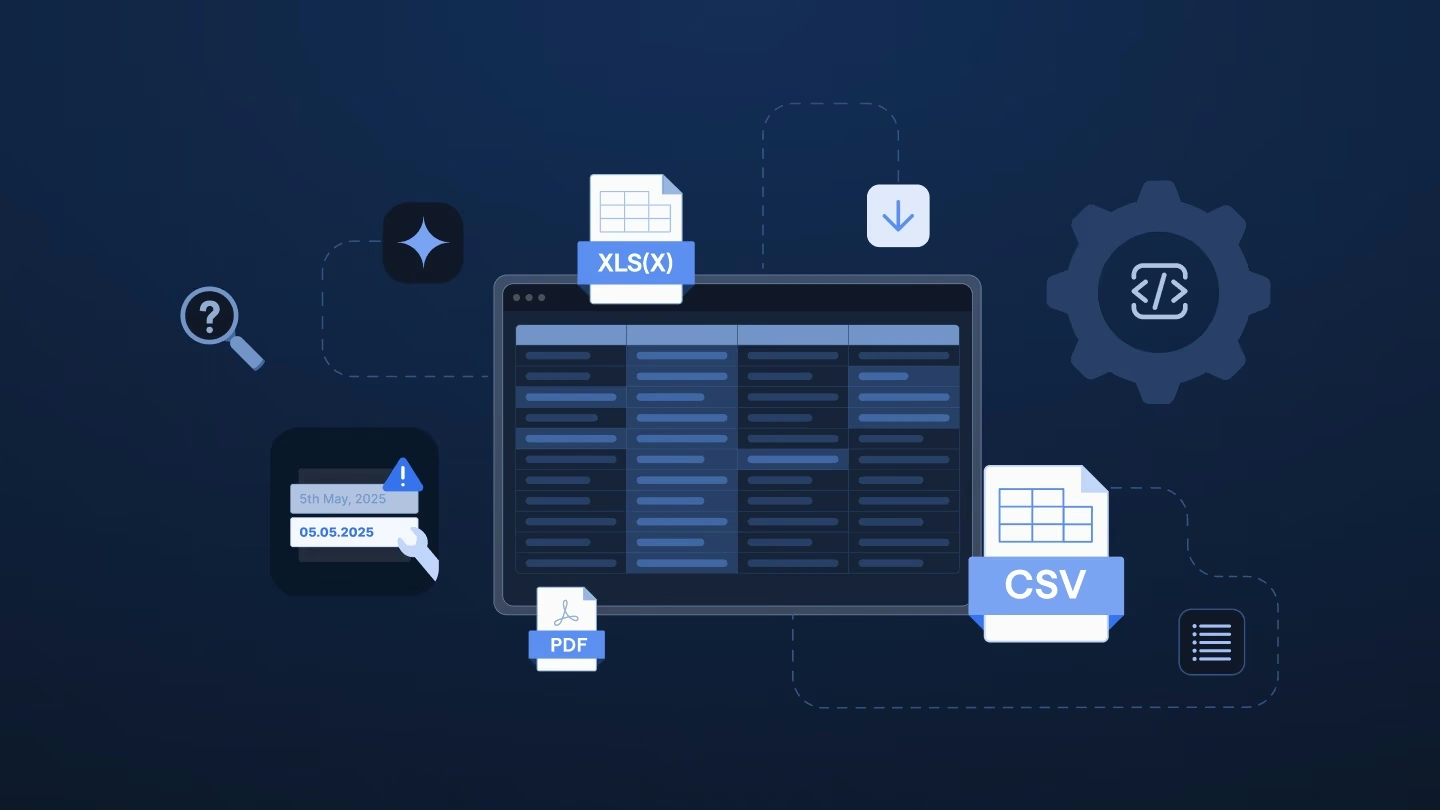
Ingestro ingests data across any standard format, including CSV, Excel, XML, JSON, and PDF, delivered via manual upload, SFTP, cloud storage, email, or scheduled API fetching. It automatically maps incoming columns to your target data model based on semantic context, so custom client labels don’t block imports.
Implementation managers can refine data using a spreadsheet-style interface, run bulk cleanup actions using plain-language commands, and run real-time validation checks against internal systems during ingest.
Teams onboarding customers can build and modify workflows directly using a visual workflow designer, removing engineering dependencies while keeping processes accessible across the team.
Ingestro provides dedicated support for enterprise clients, maintains default GDPR compliance, is independently audited for SOC 2 Type I, and holds ISO 27001:2022 certification.
When evaluating software platforms, consider your primary data ingestion path: how many of your client data imports come directly via API connections versus file exports delivered by the client team?
If system APIs drive most of your imports, an engineering platform like Superglue is a strong fit. If client-provided files make up most of your onboarding workload, your implementation team needs a platform designed for business users to process and validate incoming data directly.
Test Ingestro with your team using one of your most complex client datasets to evaluate the workflow directly.
See how Ingestro puts AI agents to work integrating customer data across sources and formats.





.png)
.png)